

Heavy Duty Wooden Crates for Industrial Equipment: Design and Load Specifications - NAS Wooden Pallets
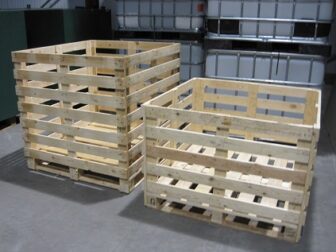
When your business needs to ship a industrial compressor from Jebel Ali to Nigeria, or a gas turbine from Abu Dhabi to Kazakhstan, cardboard boxes and standard pallets will not suffice. You need something far more robust. You need heavy duty wooden crates for industrial equipment. These engineered shipping containers are the difference between arrival in perfect condition and catastrophic failure. Let us examine the design principles and load specifications that make heavy duty crates the trusted choice for industrial logistics.
What Makes a Wooden Crate “Heavy Duty”?
Not every wooden box deserves the “heavy duty” label. True heavy duty wooden crates are purpose-engineered for extreme applications. They feature thicker lumber (typically 20mm to 30mm or more), reinforced corner joints (often using steel brackets or interlocking finger joints), internal bracing to prevent racking and twisting, and heavy-duty skids or runners for forklift access. Every component is selected and assembled with a single goal: protecting your equipment from the brutal realities of global freight.
Critical Design Elements
1. Frame Construction
Heavy duty crates use a skeleton frame – essentially a wooden cage around your equipment. Vertical posts, horizontal rails, and diagonal bracing work together to resist impact, compression, and twisting forces. The frame is the skeleton; the sheathing is the skin.
2. Skids and Runners
The bottom of a heavy duty crate is not flat. Instead, heavy timber skids (typically 40mm x 100mm or larger) run the length of the crate, providing clearance for forklift forks and distributing the load across a wider area. Proper skid design prevents the crate from sagging under its own weight plus the equipment inside.
3. Interior Blocking and Bracing
Your equipment should never touch the outer walls of the crate. Interior blocking – wooden supports custom-cut to cradle your specific machine – prevents shifting during transit. Bracing holds the equipment firmly in position, absorbing vibration and sudden shocks.
4. Ventilation (When Required)
Some industrial equipment requires airflow to prevent condensation and corrosion. Vented crates incorporate louvered openings or spaced boards, allowing air circulation while maintaining structural integrity. For moisture-sensitive equipment heading to humid climates, venting is essential.
5. Lifting and Handling Points
Heavy duty crates must be moved. Engineered lifting points – reinforced areas marked for crane hooks or forklift tines – prevent handlers from damaging the crate during loading and unloading. Clear labeling of these points is a safety requirement.
Load Specifications That Matter
Understanding load specifications helps you specify the right crate for your equipment.
Static Load Capacity
This is the weight the crate can support when stationary – sitting on a warehouse floor or inside a shipping container. Heavy duty wooden crates typically offer static capacities ranging from 5,000kg to 15,000kg or more, depending on lumber dimensions, wood species, and design complexity.
Dynamic Load Capacity
This is the weight the crate can withstand during movement – being lifted, tilted, bumped during forklift transport, or strapped down on a truck. Dynamic loads subject the crate to forces beyond simple gravity. Dynamic capacity is typically 60-70% of static capacity.
Stacking Load Capacity
When crates are stacked in warehouses or containers, the bottom crates must support the weight of those above. Stacking capacity considers both the compression strength of vertical posts and the crush resistance of the top deck. Heavy duty crates are commonly rated for 2 to 4 high stacking under full load.
Impact Resistance
Less scientific but critically important: impact resistance refers to the crate’s ability to survive drops, bumps, and collisions during handling. This is a function of wood species (hardwoods absorb impact better), joint design (reinforced corners resist shattering), and sheathing thickness (thicker boards resist puncture).
Wood Species Selection
| Species | Strength | Weight | Cost | Best Application |
|---|---|---|---|---|
| Pine/Spruce (Softwood) | Moderate | Light | Low | Light industrial, non-critical |
| Meranti (Hardwood) | Good | Medium | Moderate | General industrial |
| Oak (Hardwood) | Excellent | Heavy | High | Heavy machinery, oil and gas |
| Plywood | Good (consistent) | Medium | Moderate | Sensitive equipment needing smooth walls |
| Baltic Birch | Excellent | Medium | High | Aerospace, precision instruments |
ISPM 15 Compliance for Export
All heavy duty wooden crates destined for international export must comply with ISPM 15 regulations. This means:
- Heat treatment (achieving 56°C core temperature for 30 minutes)
- Visible IPPC stamp on at least two opposite sides
- Bark-free wood (small amounts tolerated, large pieces prohibited)
We provide full ISPM 15 certification on every export crate leaving our UAE workshop.
Custom Engineering for Your Equipment
No two industrial machines are identical. Your compressor has unique dimensions, weight distribution, and fragile components. Your turbine has specific lifting points and sensitive instrumentation. We do not offer “one-size-fits-all” crates. We offer custom engineering:
- On-site or remote consultation to understand your equipment
- CAD design showing frame, bracing, and blocking placement
- Material selection optimized for your weight and destination
- Test fitting (when practical) before final assembly
Industries We Serve Across the UAE
- Oil and Gas: Valves, pumps, compressors, drilling equipment
- Power Generation: Turbines, generators, transformers
- Aerospace: Engine components, ground support equipment
- Manufacturing: Industrial presses, CNC machines, assembly lines
- Construction: Heavy tools, concrete pumps, tower crane components
Leave A Comment