

What's the Difference Between a Skid and a Pallet? - Nejoum Al Sahil Carpentry
Introduction
Skids and pallets are both widely used in warehouses, logistics, manufacturing, storage, transportation, and distribution across the UAE. While people sometimes use the terms interchangeably, there are traditional differences in their design and construction. Understanding these differences can help warehouse managers, logistics companies, and business owners choose the right equipment for their storage and handling needs.
What Is a Pallet?
A pallet is a flat platform designed to support goods while they are being moved, stored, or transported. Pallets are typically constructed with both a top and bottom deck, separated by stringers or blocks. They are designed to be lifted by forklifts and pallet jacks from all four directions. Pallets can be made from wood, plastic, metal, or composite materials, and their designs vary depending on their intended application.
What Is a Skid?
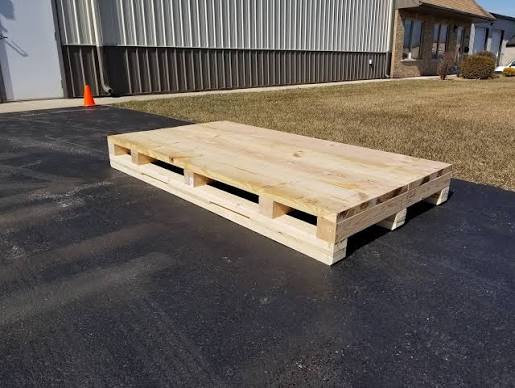
A skid is a simpler platform traditionally consisting of a single top deck supported by runners or stringers underneath, with no bottom deck. Skids are designed to be lifted by forklifts from two directions, though some modern variations may differ. The term “skid” originally referred to a structure that could be dragged or slid, which is how it got its name.
The Main Difference Between a Skid and a Pallet
The primary difference between a skid and a pallet lies in their base structure. A pallet has a bottom deck or additional supports that provide more stability. A skid traditionally has a single deck with runners underneath, without a lower deck. The bottom deck of a pallet provides extra stability, allowing it to rest evenly on warehouse floors and ensuring smoother pallet jack movement. Skids offer less support for bottom placement and typically require more careful positioning during lifting.
Key Differences
Design: Pallets generally have a top and bottom deck. Skids usually have only a top deck with runners or stringers underneath.
Lifting: Pallets can be lifted from all four directions. Skids are traditionally lifted from two directions.
Weight: Pallets are generally heavier due to more material. Skids are typically lighter because they have less material.
Cost: Pallets generally cost more than skids due to more material and construction.
Maintenance: Pallets are generally more durable and easier to repair. Skids offer less support and are easier to damage.
Which One Should You Choose?
Choose a pallet when you need a stable platform for shipping, racking, or automated systems. Pallets are better suited for pallet jacks, as the bottom deck provides a smooth surface. Choose a skid for heavy, concentrated loads that require a simpler, lighter platform. Skids are often used for storing heavy equipment, machinery, or large items where the load is placed on top. The choice ultimately depends on your specific application and handling requirements.
Leave A Comment