

Can I Order Pallets Smaller Than Standard Sizes? - Nejoum Al Sahil Carpentry
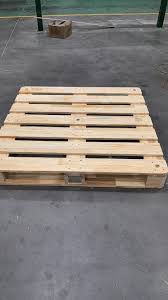
Can I Order Pallets Smaller Than Standard Sizes?
Yes, you can order pallets smaller than standard sizes. UAE pallet suppliers regularly manufacture custom-size pallets and offer smaller recognized formats such as half pallets and quarter pallets. If your products are small, your warehouse aisles are tight, or your shipping containers need better space utilization, a smaller-than-standard pallet may be the practical solution.
The key difference lies between three categories: standard pallets (common industry sizes like 1200 × 1000 mm or 1200 × 800 mm), recognized smaller formats (half and quarter pallets with established dimensions), and fully custom pallets built to your exact specifications. Understanding which category fits your operation helps you order correctly and avoid unnecessary costs.
What Are Standard Pallet Sizes?
Common pallet formats used in the UAE typically follow international supply chain standards rather than a single local standard . The most frequently used sizes include:
- 1200 × 1000 mm: The de facto ISO workhorse for Asian, Australian, and American supply chains. Common in retail distribution centers, FMCG, and general warehousing across the GCC .
- 1200 × 800 mm: The classic European EUR footprint. Used where European retail chains or EU-sourced goods set racking and truck dimensions .
- 1100 × 1100 mm: Common in Asian supply chains and automotive pools .
- 1140 × 1140 mm: The GMA (US grocery) format for North America-linked retail programs .
These sizes vary by industry, country, transport system, and application. A pallet that works for a European retail program may not suit a shipment destined for North American grocery distribution.
Can Pallets Be Made Smaller Than Standard Sizes?
Manufacturers can build wooden pallets to specified dimensions rather than limiting production to standard sizes. UAE carpentry businesses that serve the logistics sector offer custom-size wooden pallets designed to match a product’s exact footprint .
Custom length and width are the most common requests. A supplier can produce a pallet that is, for example, 1000 × 700 mm or 900 × 600 mm, depending on the load it must carry. The custom pallet is engineered around the product rather than forcing the product onto a standard pallet.
Smaller pallets may also be available as half pallets or quarter pallets, which are recognized formats with established dimensions rather than fully bespoke designs. The exact availability depends on the supplier, the pallet material, and the required specification.
Why Would a Business Need a Smaller Pallet?
Smaller pallets serve practical purposes across several industries:
- Small products: Items that occupy only a fraction of a standard pallet’s surface area.
- E-commerce shipments: Smaller order profiles that do not justify full-size pallets.
- Retail displays: Products shipped to stores in configurations that fit standard retail aisles.
- Lightweight goods: Products that do not require the structural capacity of a full-size pallet.
- Limited warehouse space: Compact storage areas where standard pallets waste floor space.
- Small delivery vehicles: Vans and light trucks that cannot accommodate full-size pallets.
- Compact storage areas: Racking or shelving with limited clear dimensions.
- Products that do not need a full-size pallet: Using a full pallet for a small product wastes material and freight space.
- Optimizing packaging and shipping space: Custom dimensions can reduce empty air in containers and trucks.
A supplier based in the UAE notes that using a pallet that is too large for the product wastes freight space, while a pallet that is too small leaves product edges vulnerable to damage . The goal is a pallet that fits the product, not one that forces the product to fit.
What Are Half Pallets and Quarter Pallets?
Half pallets and quarter pallets are smaller formats that occupy a fraction of a standard pallet’s footprint.
Half pallets typically measure around 800 × 600 mm. These are approximately half the area of a standard 1200 × 800 mm Euro pallet. They are used in retail distribution, display configurations, and situations where a full pallet would be excessive.
Quarter pallets typically measure around 600 × 400 mm. These are approximately one-quarter the area of a standard Euro pallet. They suit very small products, sample shipments, and compact display setups.
These dimensions are examples based on common industry formats. Availability varies by pallet material and supplier. For instance, EPS pallets are available in half-pallet and quarter-pallet sizes, but wooden half and quarter pallets may have different exact dimensions depending on the manufacturer . Always confirm the specific dimensions with your supplier rather than assuming a half pallet has exactly half the dimensions of a standard pallet.
Are Smaller Pallets Strong Enough?
Size alone does not determine load capacity. A smaller pallet can be engineered to carry a substantial load if its construction supports that requirement.
The factors that determine a custom pallet’s load capacity include:
- Wood thickness: Thicker deck boards resist bending and flexing better.
- Deck-board arrangement: More boards or closer spacing distributes load more effectively.
- Stringer or block construction: The support structure underneath determines how loads transfer.
- Support structure: Additional support points reduce stress on individual components.
- Fasteners: Quality nails or fasteners prevent boards from shifting under load.
- Load distribution: Evenly distributed loads maximize capacity.
- Pallet condition: New custom pallets have full structural integrity.
- Intended handling method: Forklift, pallet jack, or manual handling each create different stress patterns.
A custom pallet should be designed according to the actual load weight and application, rather than simply reducing the dimensions of a standard pallet. A UAE carpentry supplier explains that they engineer load capacity precisely to requirements—never over-engineered (which wastes money) and never under-engineered (which compromises safety) .
When Is a Custom Small Pallet Better Than a Standard Pallet?
Customization makes sense in specific situations:
- Product dimensions are significantly smaller than the pallet footprint. A standard pallet creates excessive empty space around a small product.
- A standard pallet creates excessive empty space. This wastes freight volume and can allow products to shift during transport.
- Warehouse aisles or storage areas have limited space. A smaller pallet may fit where a standard pallet cannot.
- Shipping volume needs to be optimized. Custom pallets can be dimensioned to achieve perfect pallet patterns inside containers, potentially increasing load per container .
- The product has an unusual shape. Standard pallets cannot accommodate irregular footprints without overhang or instability.
- The pallet needs to fit specific equipment or packaging. Custom dimensions ensure compatibility.
An undersized pallet can also create problems. If the product overhangs the pallet edges, the overhang is vulnerable to damage and the load becomes unstable. The goal is a pallet that supports the product fully, not one that is simply smaller.
What Should You Tell the Pallet Manufacturer?
Providing complete information ensures the custom pallet meets your requirements. Prepare these details:
- Required length and width: The exact dimensions the pallet must have.
- Desired pallet height: Including deck thickness and any blocks or stringers.
- Total load weight: The maximum weight the pallet must support.
- Product dimensions: The footprint and height of what will be placed on the pallet.
- Load distribution: Whether the load is uniform, concentrated, or irregular.
- Two-way or four-way forklift entry: How the pallet will be handled.
- Storage method: Floor stacking, racking, or shelving.
- Whether the pallet will be racked: Racking creates different stress patterns than floor storage.
- Domestic or export use: Export requires ISPM 15 compliance for wooden pallets.
- Required quantity: Single prototype or bulk order.
- New, used, or custom-built preference: Determines material sourcing and cost.
Can Small Custom Pallets Be Used for Export?
Export requirements depend on the destination and pallet material. For wooden pallets, ISPM 15 heat treatment and marking requirements apply to most international destinations .
ISPM 15 requires that wooden packaging material be heat-treated or fumigated to eliminate pests, then marked with the official IPPC stamp. The mark includes the IPPC symbol, country code, producer code, and treatment measure . UAE suppliers offer heat-treated pallets that carry this marking, ensuring smooth customs clearance .
Not every shipment or destination has identical requirements. Some countries exempt certain wood packaging materials, and processed wood products like plywood are generally exempt from ISPM 15 . If you are exporting, confirm the specific requirements for your destination market with your freight forwarder or the destination country’s plant protection organization.
How Much Do Small Custom Pallets Cost?
The price of a small custom pallet depends on several factors:
- Dimensions: Smaller pallets use less material, but custom dimensions require setup.
- Wood type: Hardwood versus softwood, new versus recycled material.
- Board thickness: Thicker boards cost more but provide greater strength.
- Construction: Block versus stringer design, number of support points.
- Load requirement: Higher load ratings may require reinforcement.
- Quantity: Larger orders typically reduce per-unit cost.
- Heat treatment: ISPM 15 compliance adds processing cost for export pallets.
- Custom design: One-off designs may carry setup costs.
- Delivery location: Distance from the supplier affects transport charges.
UAE pallet prices vary widely by supplier, condition, and specification. Some suppliers advertise custom options without fixed pricing, requiring a quote based on your specific requirements . Rather than assuming a fixed price, request a detailed quote that specifies the pallet dimensions, construction, treatment, and delivery terms.
How to Choose the Right Small Pallet
Use this practical checklist when ordering:
- Measure the product first. Determine the exact footprint and weight of what the pallet will carry.
- Leave enough support around the load. The pallet should extend slightly beyond the product edges to protect them, but not so much that it wastes space.
- Consider the total loaded weight. Ensure the custom construction can support the load under its intended handling conditions.
- Check handling equipment compatibility. Confirm your forklift or pallet jack can engage the smaller pallet safely.
- Consider warehouse/racking requirements. If the pallet will be racked, ensure it fits beam spacing and provides adequate support.
- Confirm export requirements if shipping internationally. Wooden pallets need ISPM 15 treatment and marking.
- Ask the manufacturer for a specification or drawing before ordering in bulk. A drawing ensures you and the supplier agree on exact dimensions and construction details.
A UAE carpentry supplier emphasizes that custom pallets eliminate inefficiencies by fitting the product exactly, providing a snug and stable base that reduces movement and damage risk . The right small pallet is not just smaller—it is engineered for your specific load, storage system, and shipping requirements.
Leave A Comment