
Nejoum Al Sahil Carpentry
From custom carpentry to heavy-duty wooden pallets, Nejoum Al Sahil Carpentry delivers precision-built solutions across the UAE.



From custom carpentry to heavy-duty wooden pallets, Nejoum Al Sahil Carpentry delivers precision-built solutions across the UAE.


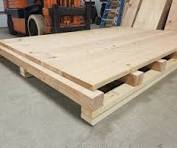
Yes, pallets can be customized for automated warehouse systems. In modern warehouses, automated storage and retrieval systems (AS/RS), conveyor belts, robotic forklifts, and automated guided vehicles (AGVs) require pallets with specific dimensions, structural strength, and handling features.
Standard pallets may work in some automated facilities, but others require specially designed pallets to ensure smooth movement, accurate positioning, and reliable handling. Customized pallets help businesses match their pallet specifications to their warehouse equipment, storage arrangements, and operational requirements.
Automated warehouse systems rely on consistent dimensions and predictable pallet movement. Unlike some manual operations, automated equipment may have limited flexibility when handling pallets that differ from the required specifications.
A pallet that is too wide, too tall, damaged, or incorrectly positioned may cause handling problems, trigger equipment faults, or interrupt warehouse operations.
Customized pallets can be designed to meet the technical requirements of the automation system. This helps improve compatibility between pallets, conveyors, storage racks, and robotic handling equipment.
Pallet dimensions are among the most important factors in automated warehouse operations.
The length, width, height, and overall tolerances must match the system’s specifications. Even small dimensional variations can affect how a pallet moves through conveyor lines or fits into automated storage locations.
Businesses can select pallet dimensions according to their product sizes, warehouse layout, and equipment requirements.
However, custom dimensions should not be selected independently of the automation system. The warehouse operator should confirm the required measurements with the equipment manufacturer or system integrator before ordering pallets.
Different materials can be used for customized pallets, depending on the warehouse environment and operational demands.
Plastic pallets are commonly considered for automated warehouse systems because they can offer consistent dimensions, smooth surfaces, and repeatable handling characteristics.
Some models include reinforced sections and design features that support conveyor movement or automated storage. However, not every plastic pallet is suitable for automation, so the exact model must be tested or approved for the intended system.
Wooden pallets can be used in certain automated operations when their construction, dimensions, and condition meet the system’s requirements.
However, variations in wood, fasteners, moisture content, and wear can affect dimensional consistency. Some highly automated systems therefore specify particular pallet designs or prefer materials with more consistent manufacturing tolerances.
Metal pallets may be suitable for specialised industrial applications involving heavy products, high temperatures, or demanding operating environments.
Their weight, design, surface characteristics, and compatibility with sensors and handling equipment must be considered before use.
The most appropriate material depends on the specific automation system rather than a universal preference for one pallet type.
Conveyor belts are widely used to transport goods between receiving, storage, picking, and dispatch areas.
Pallets moving through these systems must have suitable bottom-deck designs, support surfaces, and dimensions. Some conveyor systems require specific runner arrangements or defined contact points to ensure stable movement.
A pallet with an unsuitable underside may not travel smoothly over rollers or may fail to maintain the required position.
Customized pallets can be designed to match the conveyor type and the way the pallet is supported during transportation.
Automated storage and retrieval systems place and retrieve pallets from designated warehouse locations using mechanical equipment.
These systems often require pallets to meet precise dimensional and load specifications. Pallet rigidity is also important because excessive bending or deformation can affect handling and storage safety.
Customized pallets may include reinforced support areas, specific bottom-deck arrangements, and controlled manufacturing tolerances.
The pallet’s load capacity must be appropriate for the intended storage configuration. A pallet suitable for floor storage may not be suitable for a particular rack-supported application.
Robotic forklifts and automated guided vehicles use sensors, positioning systems, and programmed movements to handle palletised goods.
Depending on the equipment, customized pallets may incorporate features such as:
These features can help equipment identify, approach, lift, and transport pallets as intended.
However, barcode and RFID placement should follow the system’s scanning requirements. A tag alone does not make a pallet compatible with automated handling.
Automated warehouses often handle goods repeatedly throughout the day. Pallets must support the product weight without excessive bending, instability, or damage.
When selecting customized pallets, businesses should consider three important load ratings:
Static load capacity: The weight the pallet can support while resting on a fully supporting surface.
Dynamic load capacity: The weight the pallet can safely carry while being lifted and transported.
Racking load capacity: The weight it can support when positioned on warehouse rack beams without continuous support underneath.
These capacities can differ substantially. The pallet must meet the applicable rating for each stage of the warehouse operation.
The design should also account for unevenly distributed loads, repeated use, and the possibility of impact during handling.
Before introducing customized pallets across an automated warehouse, businesses should confirm that the selected design works with their equipment.
Compatibility checks may include:
Testing can identify issues before they affect large volumes of warehouse operations.
Businesses should involve their automation supplier or system integrator when specifying and validating pallet designs, particularly for high-speed or high-density storage systems.
The cost of a customized pallet depends on several factors, including material, dimensions, load capacity, reinforcement, manufacturing tolerances, and the number of units required.
Special features for conveyors, robotic handling, barcode placement, or automated storage may increase design and manufacturing requirements.
Testing, sample production, and system validation can also contribute to the overall project cost. For large warehouse operations, it is important to evaluate durability, replacement frequency, and handling performance alongside the initial purchase price.
Pallets can be customized to meet the requirements of automated warehouse systems, including conveyor belts, robotic forklifts, automated guided vehicles, and automated storage and retrieval systems.
The most important considerations are dimensional accuracy, material consistency, bottom-deck d
Leave A Comment