
Nejoum Al Sahil Carpentry
From custom carpentry to heavy-duty wooden pallets, Nejoum Al Sahil Carpentry delivers precision-built solutions across the UAE.


From custom carpentry to heavy-duty wooden pallets, Nejoum Al Sahil Carpentry delivers precision-built solutions across the UAE.


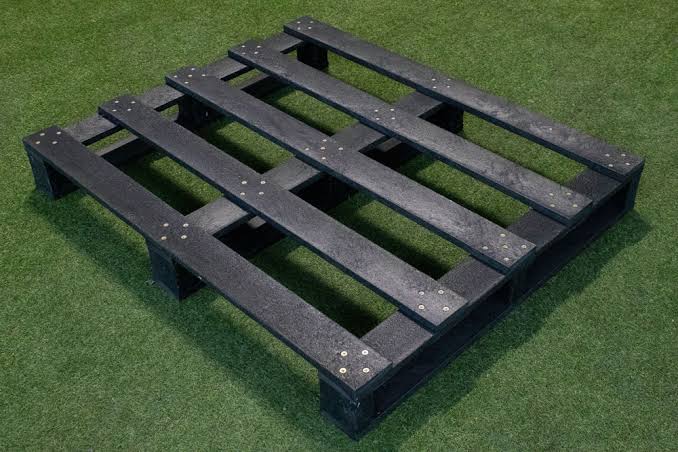
Businesses across manufacturing, warehousing, retail, and logistics often need pallets that fit their products and handling systems. Standard pallets are suitable for many applications, but some goods require specific dimensions, additional support, or special handling arrangements. In these situations, customized recycled pallets can be a practical solution.
Yes, recycled pallets can be customized for specific products, provided their existing condition, design, and structural capacity allow safe modifications. Businesses can adapt suitable used pallets by changing dimensions, replacing damaged boards, adjusting the deck layout, or adding appropriate supports.
Customization can help companies use warehouse space more efficiently, protect products during transportation, and reduce unnecessary packaging costs. However, modifications must not compromise the pallet’s strength or make it unsuitable for forklifts, pallet trucks, or warehouse racking.
Customized recycled pallets are previously used pallets that are repaired or modified to meet specific product and handling requirements.
Instead of purchasing entirely new pallets, businesses may be able to reuse suitable pallets and adapt them for their operations. The work required depends on the pallet’s original construction, current condition, and intended application.
Common customization options include:
Not every recycled pallet can be modified successfully. Some designs are better suited to customization than others, and severely damaged pallets may need to be rejected rather than altered.
Some products do not fit standard pallet sizes efficiently. Oversized machinery parts, long industrial materials, irregularly shaped packages, and specially designed cartons may require different dimensions.
Suitable recycled pallets can sometimes be shortened, widened, or rebuilt to fit a particular product.
For example, a manufacturer transporting long components may need a longer pallet base to support the items properly. A business shipping smaller cartons may prefer a compact pallet that reduces unused space.
Before changing the dimensions, the supplier should assess the pallet’s construction, load distribution, and compatibility with handling equipment.
Heavy products may require stronger support and a more suitable load distribution arrangement.
Depending on the original design, a recycled pallet may be modified with appropriate replacement boards or structural components. This can be useful for selected industrial equipment, machine parts, and heavy packaged materials.
However, adding more wood does not automatically increase a pallet’s safe load capacity. The completed pallet must be assessed for its intended load, handling method, and storage conditions.
For very heavy or high-value products, a purpose-built pallet may be safer than modifying an existing one.
Businesses that ship cartons may need pallets with a particular deck arrangement to support the packaging.
For example, smaller cartons may require a more continuous supporting surface, while other packages may work with a pallet that has wider gaps between boards.
Suitable recycled pallets can sometimes be repaired or adapted to improve the support provided to the cartons. The finished arrangement should prevent excessive overhang and reduce the risk of cartons shifting during movement.
Industrial drums and containers need a stable base that supports their shape, weight, and arrangement.
A suitable recycled pallet may be adapted for a compatible drum or container layout. However, the pallet must provide sufficient support and remain stable during forklift handling and transportation.
Businesses should also consider whether the product could leak, react with the pallet material, or require secondary containment. Pallet customization alone does not make a chemical shipment safe.
Machinery and metal components can have unusual shapes, concentrated weight, or delicate surfaces.
Customized recycled pallets may be fitted with suitable supports or blocking arrangements to reduce movement and protect the products during transport.
Where necessary, additional restraints or protective packaging can be used. These should be designed to secure the product without creating unsafe lifting conditions.
For high-value machinery, the pallet design should be based on the product’s weight, centre of gravity, lifting points, and transport requirements.
When suitable used pallets are available, modifying them may cost less than purchasing new custom-built pallets. The actual saving depends on the extent of the work, material requirements, and availability of suitable pallets.
A pallet that fits the product correctly can help distribute its weight and reduce unwanted movement. Suitable dimensions and support arrangements may also reduce packaging damage during handling.
Custom dimensions can help businesses use storage and transport space more effectively. Pallets that match the product and handling system can also make loading and unloading more convenient.
Reusing and repairing suitable pallets can extend their service life and reduce the demand for new pallet materials. This supports more efficient resource use when pallets are maintained and reused safely.
Businesses with changing inventory or different packaging formats may benefit from adapting suitable recycled pallets for particular applications rather than relying on a single standard size.
Before modifying a recycled pallet, businesses should evaluate several important factors.
| Factor | Why It Matters |
|---|---|
| Product dimensions | Determines the required pallet length, width, and support area |
| Product weight | Helps establish the necessary structural capacity |
| Load distribution | Prevents excessive pressure on individual boards or supports |
| Pallet condition | Identifies whether the original structure is suitable for modification |
| Handling equipment | Ensures compatibility with forklifts and pallet trucks |
| Storage method | Determines whether the pallet is suitable for floor storage or racking |
| Product sensitivity | Identifies packaging, hygiene, moisture, or contamination concerns |
| Transport requirements | Helps determine whether the pallet is suitable for local or international shipments |
A pallet should be assessed after customization to confirm that the completed design remains suitable for its intended use.
No. The possibility of customization depends on the pallet’s material, original design, condition, and required modifications.
A pallet with minor wear may be suitable for repair and adaptation. However, one with extensive rot, major cracks, broken structural supports, or unknown chemical contamination may not be appropriate for reuse.
Plastic pallets also have different customization limitations. Cutting or drilling a moulded plastic pallet can weaken its structure and may not be recommended by the manufacturer.
Businesses should consult a qualified pallet supplier or repair specialist before making structural changes.
In the UAE, businesses in construction, manufacturing, logistics, retail, and industrial supply chains may need pallets that fit particular products or warehouse systems.
When selecting customized recycled pallets, companies should consider local storage conditions, heat exposure, humidity, transportation requirements, and the type of goods being handled.
For international shipments using wooden pallets, check whether the destination requires compliance with the International Standards for Phytosanitary Measures No. 15 (ISPM 15). Where applicable, the pallet must meet the required treatment and marking rules. Customization or repair may affect compliance, so confirm the requirements with the supplier before export.
Businesses should request details about pallet dimensions, repair quality, load ratings, and the modifications performed. This helps ensure that the customized pallet is appropriate for the intended application.
If your business needs customized recycled pallets, follow these steps:
Providing accurate information helps the supplier recommend a practical solution and avoid unnecessary modifications.
They can be cheaper when suitable used pallets require only limited repairs or modifications. Extensive rebuilding may reduce or eliminate the cost advantage, so compare quotations for both options.
Yes, suitable wooden pallets can sometimes be rebuilt or modified to non-standard dimensions. The design must retain adequate strength and remain compatible with handling equipment.
Potentially, yes. However, the pallet must be designed or assessed for the machinery’s weight, centre of gravity, lifting requirements, and transport conditions. A new purpose-built pallet may be necessary for particularly heavy or valuable equipment.
Only when the completed pallet is suitable for the specific racking system and load. Racking capacity must not be assumed from the pallet’s floor-storage capacity.
They may be used for export if they meet the shipment’s packaging, transport, and destination requirements. Wooden pallets may need to comply with ISPM 15, depending on the destination and applicable rules.
Customized recycled pallets can be a practical option for businesses that need specific pallet dimensions, improved product support, or a better fit for their handling systems. When suitable pallets are available, customization may reduce packaging costs, improve space utilization, and extend the useful life of existing materials.
The key is to select pallets in suitable condition and ensure that all modifications preserve structural strength, load capacity, and handling safety. By working with an experienced pallet supplier, businesses can determine whether a recycled pallet can be adapted safely or whether a new custom-built design is the better choice.
Leave A Comment