

Best Wooden Boxes for Moving: A Complete Guide - Nejoum Al Sahil Carpentry
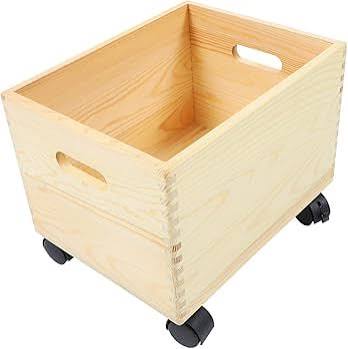
Introduction
Moving to a new home or office comes with many decisions, and choosing the right packaging can significantly affect how well your belongings arrive at the destination. While cardboard boxes are the most common choice, wooden boxes and crates offer a different level of protection for heavy, fragile, or valuable items. However, the best wooden box for moving depends on what you are moving, how far it’s travelling, and how it will be handled. This guide explains the different options and how to choose the right one for your needs.
Why Use Wooden Boxes for Moving?
Wooden boxes provide greater structural rigidity than cardboard, offering protection against impacts and better support for heavy items. They are reusable and, when properly designed, stackable, making them practical for both storage and transportation. For fragile items, wooden boxes provide a rigid outer shell that can absorb impacts and protect the contents, especially when combined with internal padding. Unlike cardboard, which can weaken when exposed to moisture, wooden boxes maintain their structural integrity in humid or dusty environments.
What Types of Wooden Boxes Are Best for Moving?
Solid-Wood Boxes
Solid-wood boxes are constructed from timber boards. They are exceptionally strong and durable, making them suitable for heavy items like tools, equipment, and machinery. However, they are heavier and generally more expensive than plywood alternatives.
Plywood Boxes
Plywood boxes are lighter than solid wood while still providing excellent strength. The layered construction of plywood resists splitting and offers a smooth surface that can be easily labelled. Plywood boxes are versatile and work well for most household and office items.
Wooden Crates
Wooden crates differ from fully enclosed boxes. Instead of solid sides, they consist of a frame with wooden slats. Crates provide good ventilation and are lighter than fully enclosed boxes, but they offer less protection against dust and fine particles.
Custom-Built Wooden Boxes
For unusually shaped or particularly valuable items, custom-built boxes provide the best protection. They are designed to the exact dimensions of the item, eliminating movement inside the container and providing tailored structural support where it’s needed most.
Collapsible or Reusable Wooden Boxes
These boxes can be folded down when not in use, saving storage space. They are an environmentally friendly option and offer good value for businesses or individuals who move or store items regularly.
Best Wooden Box for Different Items
Fragile items (glassware, crockery, vases): A fully enclosed plywood box with internal padding. The box should fit the items snugly to prevent movement.
Electronics: A custom-fitted plywood box with foam or other cushioning. Anti-static materials may be required for sensitive equipment.
Artwork and mirrors: Large, flat plywood or solid-wood crates with corner protectors and internal bracing. The item should be secured to prevent shifting.
Furniture: Disassembled furniture can be packed in large plywood crates with internal padding and corner protectors. For high-value furniture, custom crating is often recommended.
Books and documents: Smaller, lightweight plywood boxes are suitable. Books are heavy, so avoid overloading the box.
Tools and machinery: Solid-wood boxes or heavy-duty plywood crates with internal bracing. The weight should be evenly distributed.
How to Choose the Right Size
The right box should be only slightly larger than the item it contains, allowing space for cushioning materials but minimising empty space. Boxes that are too large allow items to shift during transport, increasing the risk of damage. Boxes that are too small may not provide adequate protection, especially for fragile items.
Wooden Box vs. Cardboard Box for Moving
Cardboard boxes are lightweight, inexpensive, and readily available. They are suitable for clothing, linens, books, and other relatively easy-to-pack household items. Wooden boxes offer greater protection against impacts, moisture, and crushing, making them the better choice for heavy, fragile, or valuable items. However, wooden boxes are heavier, more expensive, and require more storage space when empty.
How to Pack Items Inside a Wooden Box
Proper packing is just as important as the box itself. Wrap fragile items individually with bubble wrap or packing paper. Place heavier items at the bottom of the box. Fill any gaps around the contents with cushioning material to prevent movement. Use dividers for multiple fragile items. For heavy items, ensure the weight is distributed evenly to avoid putting stress on one area of the box. Close the box securely and ensure it can be lifted safely.
How to Secure a Wooden Moving Box
Proper closing and securing is essential to prevent the contents from shifting or the box from opening during transport. Use nails, screws, or appropriate fasteners depending on the box design. Ensure handles or lifting points are suitable for the box’s actual weight. For international shipments, consider applying appropriate labels or markings for handling instructions.
Should You Buy or Hire Wooden Moving Boxes?
Buying new boxes is a good option if you plan to move frequently or need boxes in specific sizes that are not available for rental. Reusing suitable boxes can be cost-effective if the boxes are in good condition. Renting reusable wooden crates is an economical choice for one-time moves. Hiring a professional moving company that provides wooden crate packaging may be the most convenient option.
Wooden Boxes for Long-Distance or International Moving
When moving long distances or across borders, consider moisture exposure during transit, handling during loading and unloading, stacking requirements, forklift compatibility, internal bracing, and wood packaging regulations. Exporters should verify the destination country’s current ISPM 15 requirements.
Common Mistakes to Avoid
- Choosing a box that is too large for the item.
- Overloading the box beyond its capacity.
- Failing to cushion fragile items.
- Leaving empty space around the contents.
- Using damaged wood.
- Ignoring moisture exposure.
- Poorly securing the box for transport.
- Using a crate when a fully enclosed box is needed.
Wooden Moving Box Checklist
Before you start packing, ask yourself: Is the box strong enough for the item’s weight? Is the size appropriate? Is the wood in good condition? Does the item need a fully enclosed box? Is internal cushioning required? Can the box be safely lifted? Does the packaging need to be reusable? Are there special shipping or export requirements?
Conclusion
Choosing the best wooden box for moving depends on the item being moved, its weight and fragility, the transportation distance, and your budget. The best wooden box is not necessarily the largest or strongest one—it is the one properly matched to the item’s specific requirements. For valuable or fragile items, custom boxes offer the highest level of protection. For heavier household goods, plywood boxes provide a practical balance of strength and weight. And for short-distance moves, wooden boxes may be combined with reusable or rental options. The right choice will protect your belongings and make the moving process smoother.
Leave A Comment