
Nejoum Al Sahil Carpentry
From custom carpentry to heavy-duty wooden pallets, Nejoum Al Sahil Carpentry delivers precision-built solutions across the UAE.



From custom carpentry to heavy-duty wooden pallets, Nejoum Al Sahil Carpentry delivers precision-built solutions across the UAE.


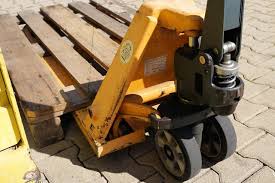
Choosing the right pallet thickness is important when transporting, storing, or handling heavy products. A pallet that is too thin may bend, crack, or break under excessive weight, while an unnecessarily thick pallet can increase material costs and make handling less efficient.
For businesses in the UAE, selecting the correct pallet thickness helps protect goods, improve warehouse safety, and support smooth transportation. The right choice depends on the load weight, product dimensions, pallet material, storage conditions, and handling equipment.
The first step is to calculate the total weight that the pallet will carry. Include the weight of the products, packaging, and any additional materials placed on it.
For example, a pallet carrying heavy machinery requires a stronger structure than one carrying lightweight cartons.
Do not select pallet thickness based on weight alone. The way the weight is distributed across the pallet is equally important.
Different pallet materials have different strength and thickness requirements.
The same thickness does not provide the same load capacity across different materials.
How products are placed on a pallet can affect its performance.
Concentrated and uneven loads may require thicker deck boards, additional support blocks, or a stronger pallet design.
Before selecting pallet thickness, identify how the pallet will be used.
Static Load: This is the weight a pallet supports while resting on a flat surface without moving.
Dynamic Load: This is the weight a pallet carries while being moved using a forklift or pallet truck.
Racking Load: This refers to the weight supported when a pallet is stored on warehouse racking, usually with support at specific points.
Racking applications often require particular attention because the pallet may bend between its support points. Always check the manufacturer’s load ratings for the intended storage system.
For wooden pallets, deck board thickness is an important design factor. Thicker boards can improve resistance to bending, but thickness alone does not determine strength.
Other factors include:
A pallet manufacturer should assess these factors before recommending the correct board thickness for heavy loads.
Pallets used in warehouses may experience different stresses from pallets used for long-distance transportation.
Consider whether pallets will be:
For UAE businesses, heat, humidity, and storage conditions should also be considered when selecting pallet materials.
For heavy or valuable products, do not rely on visual appearance alone. Ask the pallet supplier for load-capacity specifications and, where appropriate, test reports.
A suitable pallet should be evaluated under the actual conditions in which it will be used. This is especially important for heavy machinery, industrial equipment, chemicals, and export cargo.
| Factor | Why It Matters |
|---|---|
| Total load weight | Determines the required strength |
| Material type | Different materials have different strength properties |
| Load distribution | Affects pressure on individual boards |
| Pallet dimensions | Larger spans may need additional support |
| Storage method | Racking requires suitable structural support |
| Handling equipment | Forklifts and pallet trucks create different stresses |
| Reusability | Repeated use requires consideration of durability |
No. Thickness is only one part of pallet strength. Material quality, board dimensions, support spacing, construction, and load distribution also affect capacity.
Properly designed hardwood or softwood pallets can support heavy loads. The correct option depends on the timber grade, construction, dimensions, and required load rating.
Signs may include visible bending, cracked boards, loose fasteners, damaged blocks, or instability under load. Stop using a damaged pallet for heavy goods and have it inspected or replaced.
It may need to be. Racking places loads on specific support points, so the pallet must be designed and tested for the actual rack configuration.
Yes. Manufacturers can produce custom-sized pallets with suitable board thickness, support blocks, and reinforced construction according to machinery dimensions and weight.
Choosing the right pallet thickness for heavy loads requires more than simply selecting thicker wooden boards. Businesses should consider total weight, material quality, load distribution, pallet dimensions, storage methods, and handling conditions.
For heavy machinery and industrial goods, working with an experienced pallet manufacturer and checking the recommended load capacity can help ensure safe and reliable transportation and storage.
Leave A Comment