
Nejoum Al Sahil Carpentry
From custom carpentry to heavy-duty wooden pallets, Nejoum Al Sahil Carpentry delivers precision-built solutions across the UAE.



From custom carpentry to heavy-duty wooden pallets, Nejoum Al Sahil Carpentry delivers precision-built solutions across the UAE.


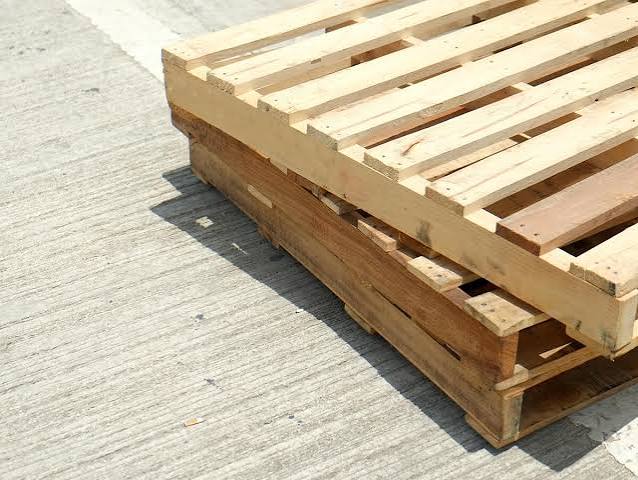
Custom pallets are designed to carry and transport goods according to specific business and storage requirements. Their load capacity is an important factor because it determines how much weight a pallet can safely support during handling, transportation, and storage.
In the UAE, businesses use custom pallets in warehouses, manufacturing facilities, logistics operations, and export industries. However, the load capacity of a custom pallet depends on several factors, including its dimensions, material, construction, design, and intended use.
Understanding these factors helps businesses select pallets that can safely handle their products and reduce the risk of damage during transportation.
The material is one of the main factors affecting pallet load capacity. Different materials offer different levels of strength, durability, and resistance to damage.
Businesses should select the material according to product weight, handling conditions, and storage needs.
The dimensions of a custom pallet also influence how much weight it can support. Length, width, height, and the spacing between supporting components all affect its strength.
A pallet designed for a particular product should provide enough surface area to distribute the load properly. Oversized or poorly proportioned designs may create uneven weight distribution and increase the risk of bending or damage.
Custom dimensions should be planned according to the product size, warehouse requirements, and transportation equipment.
The overall construction plays an important role in determining load capacity. The number of deck boards, stringers, blocks, and their arrangement can affect how weight is distributed across the pallet.
Important design elements include:
A properly engineered pallet can distribute weight more evenly and provide better support during handling.
Not all products place weight on a pallet in the same way. The type and arrangement of goods can affect the pallet’s performance.
For example, evenly distributed cartons may place less stress on specific areas than a heavy machine or product with concentrated weight.
Businesses should consider whether the load is:
Proper product placement helps reduce pressure on individual pallet components.
Pallet load capacity is not a single measurement. It depends on how the pallet is being used.
Static Load Capacity: This refers to the maximum load a pallet can support while resting on a flat, stable surface without moving.
Dynamic Load Capacity: This refers to the load a pallet can safely carry while being moved, such as during forklift or pallet truck handling.
Racking Load Capacity: This refers to the load a pallet can support when placed on a warehouse racking system. The pallet is supported at specific points, so its construction and strength are especially important.
Businesses should check all three ratings where relevant instead of relying on only one load-capacity figure.
Manufacturing quality directly affects pallet strength and reliability. Even pallets made from the same material can have different load capacities because of differences in workmanship.
Poor-quality timber, weak joints, incorrect fastening, and inconsistent dimensions can reduce structural strength.
A reliable manufacturer should use suitable materials, accurate measurements, proper assembly methods, and quality checks to ensure that custom pallets meet the required specifications.
Environmental conditions can affect pallet performance over time.
In the UAE, high temperatures, humidity in some areas, and changing storage conditions should be considered when selecting pallet materials.
For wooden pallets, moisture can contribute to warping, swelling, or deterioration. Plastic pallets may also be affected by prolonged exposure to high temperatures or direct sunlight, depending on their material.
Proper storage in suitable conditions helps maintain pallet strength and service life.
The equipment used to move pallets also affects their load requirements.
Forklifts, pallet trucks, conveyor systems, and automated warehouse equipment may support or handle pallets differently.
For example, a pallet designed for forklift handling may require specific openings and structural support. A pallet used in automated systems may need accurate dimensions and consistent construction.
Businesses should explain their handling requirements to the manufacturer before ordering custom pallets.
Before ordering custom pallets, businesses should identify their actual operational requirements.
Consider the following steps:
Avoid choosing a pallet based only on its advertised maximum capacity. Its suitability should be confirmed for the actual application.
Yes. Custom pallets can be designed for heavier loads by adjusting their dimensions, materials, and supporting structure. However, their actual capacity depends on engineering and testing.
Hardwood is commonly used for heavy-duty wooden pallets because of its strength. However, the best material depends on the load, handling method, environment, and budget.
Yes. Pallet dimensions and the arrangement of supporting components affect how weight is distributed. A suitable design is necessary to prevent bending and structural failure.
Racking load capacity is important because pallets may be supported only at specific points inside warehouse racks. A pallet that performs well on the floor may not be suitable for rack storage.
Yes. Manufacturers can conduct suitable load tests to assess pallet performance under specified conditions. Businesses should request relevant test results and capacity information before using pallets for demanding applications.
The load capacity of custom pallets depends on several factors, including material quality, dimensions, construction, product weight, load distribution, and handling conditions. Static, dynamic, and racking capacities should also be considered separately.
For businesses in the UAE, choosing properly designed custom pallets can improve warehouse handling, protect goods, and support safer transportation. Working with an experienced manufacturer helps ensure that the pallet design matches the actual weight and operational requirements.
Leave A Comment