

What Wood Should I Choose for My Custom Box? - Nejoum Al Sahil Carpentry
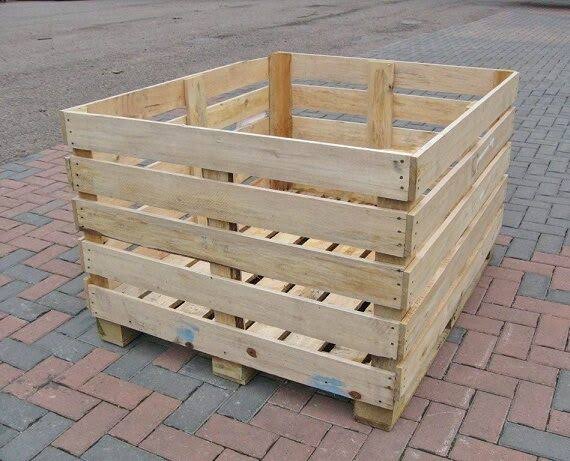
Choosing the right wood for a custom box is one of the most important decisions you will make when ordering packaging. The material you select affects how well your box protects its contents, how much it weighs, how it looks, and whether it can legally cross international borders. Wood for custom box projects should never be chosen on appearance alone. The correct material must match the contents, the expected load, how the box will be handled, and where it is going.
What Wood Is Best for a Custom Box?
There is no single best wood for every custom box. The right choice depends entirely on the application. Common options include:
- Plywood — engineered panels made from layers of wood veneer
- Pine — a widely available softwood
- Spruce — another common softwood, often lighter than pine
- Other softwoods — suitable for general-purpose packaging
- Hardwood — denser species used for durability or premium appearance
- Engineered wood products — including MDF and oriented strand board where appropriate
Each material has distinct properties. A box that performs well for one product may be wrong for another.
Plywood for Custom Boxes
Plywood is one of the most common materials for packaging and custom boxes. It is made by bonding multiple layers of wood veneer with adhesive under heat and pressure, with grain directions alternating between layers.
Benefits include:
- Consistent sheet construction — strength is distributed across the panel
- Good dimensional stability — less prone to warping than solid wood
- Smooth surfaces — suitable for labels, printing, or finishing
- Easy customization — can be cut and assembled into various shapes
- Useful for shipping and protective packaging — provides a solid barrier
Plywood comes in different grades and thicknesses. Exterior-grade plywood uses waterproof adhesives, while interior grades do not. Do not assume all plywood has the same strength or moisture resistance. Specifications matter, and your supplier should confirm exactly what grade and thickness will be used.
Softwood for Custom Boxes
Softwoods such as pine and spruce are widely used in packaging. They come from coniferous trees, grow relatively quickly, and are generally more affordable than hardwoods.
Potential advantages:
- Relatively lightweight — helps control shipping costs
- Easy to cut and assemble — suitable for custom fabrication
- Widely available — easy to source in most markets
- Suitable for general-purpose packaging — performs well for many applications
- Cost-effective — often less expensive than hardwood
The specific grade and construction method affect performance. A low-grade softwood with large knots will not perform like a higher grade with tight grain. In the UAE, pine is commonly used for pallets and crates because it balances cost and strength effectively .
Hardwood for Custom Boxes
Hardwood may be selected when the box needs greater durability or a more premium appearance. Common hardwood species used in packaging and custom boxes include oak, cherry, and mahogany, though availability and cost vary by region .
Considerations:
- Density — harder species resist impact and wear better
- Durability — holds up to repeated handling and stacking
- Appearance — often has attractive grain patterns
- Weight — denser wood makes the box heavier
- Cost — generally more expensive than softwood
Hardwood is not automatically the best choice for every shipping application. A heavy hardwood box increases freight costs and may be unnecessary for products that do not require that level of protection.
How to Choose Wood Based on What You Are Packing
The contents should drive the material decision.
Fragile products:
Focus on protective construction, internal cushioning, and appropriate panel thickness. The wood type matters less than how the box is designed to absorb shock.
Heavy equipment:
Consider structural design, wood grade, reinforcement at corners and base, and load distribution. Hardwood or thick plywood may be appropriate.
E-commerce or retail products:
Consider appearance, weight, and cost. A lighter softwood or plywood box may be sufficient while keeping shipping affordable.
Industrial equipment:
Focus on durability, secure fastening, internal bracing, and handling requirements. The box must protect both the equipment and anyone moving it.
International shipments:
Consider applicable wood-packaging treatment requirements before choosing solid wood.
Does Wood Thickness Matter?
Thickness affects the box’s weight, rigidity, durability, and cost. Thicker panels provide more strength but add weight and expense.
Thickness should be selected based on:
- Box dimensions
- Contents weight and fragility
- Expected load during stacking
- Handling method
- Transportation conditions
- Internal support requirements
There are no universal thickness recommendations that apply to every box. A small jewelry box and a crate for machinery require completely different specifications.
Custom Box Design Matters as Much as the Wood
Box performance depends on more than the timber itself. Design elements include:
- Joint design — how panels connect affects overall strength
- Fasteners — screws, nails, or staples must be appropriate for the load
- Reinforcement — corner blocks and edge protection add rigidity
- Internal bracing — prevents contents from shifting
- Base construction — must support the full weight of contents
- Lid design — affects access and protection
- Weight distribution — even distribution prevents stress points
- Internal cushioning — foam, paper, or other materials absorb shock
A well-designed box made from an appropriate material can outperform a poorly designed box made from more expensive wood. Design and material work together.
Wood for Export and International Shipping
Solid-wood packaging used in international trade may be subject to ISPM 15 requirements. ISPM 15 is an international standard that regulates wood packaging material to prevent the spread of plant pests .
Under ISPM 15, approved treatments include heat treatment (wood core reaching 56°C for at least 30 minutes) and fumigation with methyl bromide . Treated packaging must carry the IPPC mark showing the country code, facility identifier, and treatment type.
Important points:
- Not every shipment requires ISPM 15 treatment. Requirements depend on the destination country and the type of wood packaging.
- Processed wood products such as plywood are generally exempt from ISPM 15 because the manufacturing process eliminates pest risk .
- The UAE’s Ministry of Climate Change and Environment accredits heat treatment facilities for wood packaging, requiring controlled heat chambers capable of maintaining 56°C for at least 30 minutes .
- Businesses should confirm with their supplier whether treatment is required and whether ISPM 15-compliant packaging can be provided.
How Much Does the Wood Choice Affect Cost?
Material choice affects total cost through:
- Wood price per unit
- Thickness and quantity required
- Availability in your market
- Box size and complexity
- Manufacturing labor
- Reinforcement and internal supports
- Finishing or treatment
- Quantity ordered
Larger orders typically reduce per-unit costs. Custom sizes and specialized treatments add expense. The total cost of a box includes all these factors, not just the raw wood price.
Questions to Ask a Custom Box Supplier
Before placing an order, ask:
- What type of wood do you recommend for my product?
- What wood grade will be used?
- What thickness is appropriate for my contents and shipping method?
- Can the box be reinforced?
- Will internal supports be included?
- Is the wood suitable for my transportation conditions?
- Is treatment available for international shipments?
- Can you provide ISPM 15-compliant packaging if required?
- What will the total box weight be?
- Can you provide a sample or prototype?
Final Recommendation
The right wood for custom box projects depends on the contents, box size, required strength, transportation conditions, budget, and regulatory requirements. There is no universal answer. Plywood offers stability and versatility. Softwoods provide a cost-effective option for many applications. Hardwoods deliver durability and appearance where needed.
Discuss your specific product and shipping conditions with an experienced packaging supplier in Dubai, Abu Dhabi, or Sharjah. They can recommend materials and designs that balance protection, cost, and compliance for your particular needs.
Leave A Comment